
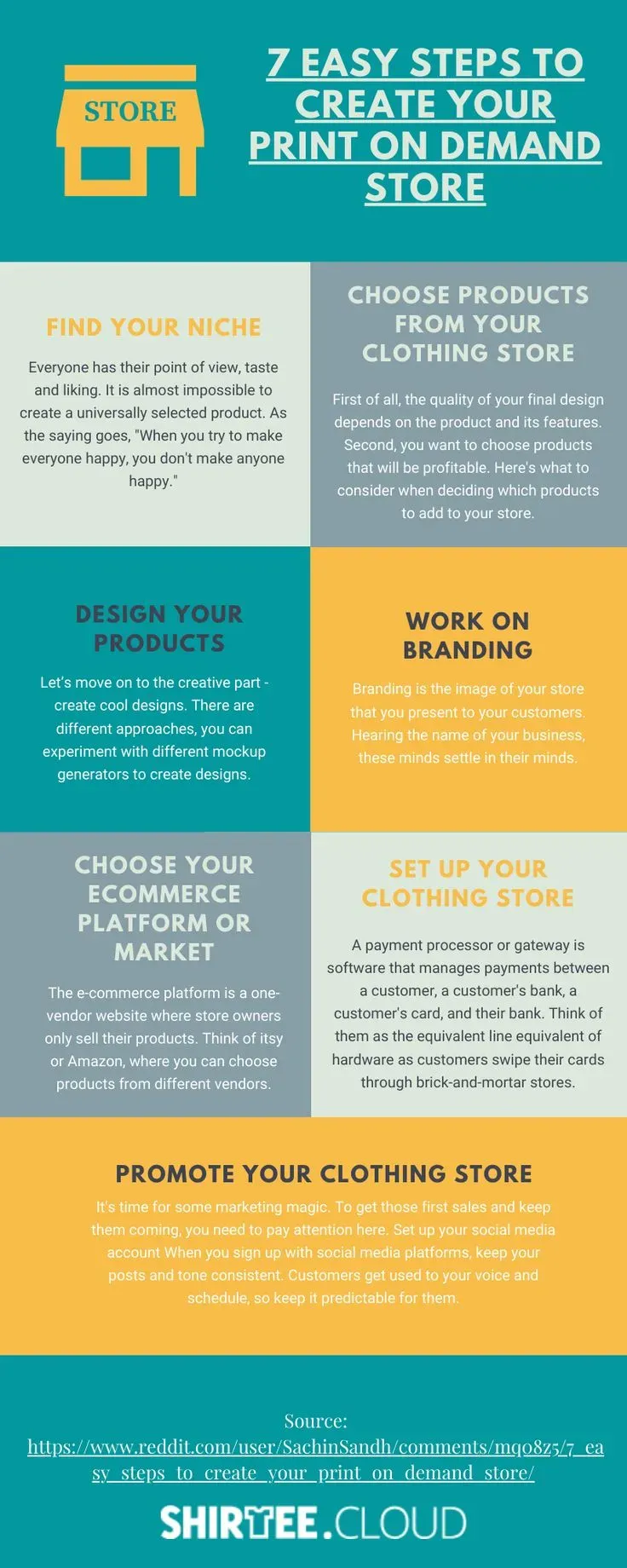
Launch Your Print on Demand Store in 7 Simple Steps is a practical blueprint for turning design ideas into a scalable online business with minimal upfront investment. This guide shows how to choose a niche that resonates, select the best print on demand platforms, and set up a storefront that attracts early customers and sustains growth. Along the way, you’ll master start a print on demand business mindset, learn design tips for print on demand, and apply POD marketing strategies to build momentum. You’ll also see how a clear print on demand store setup supports reliable fulfillment, strong branding, and a more predictable path to profitability. Whether your niche is apparel, home decor, or lifestyle accessories, these seven steps help you launch with confidence and grow into a sustainable online storefront.
In other terms, this approach provides a plug‑and‑play blueprint for launching a customized e‑commerce venture that leverages on‑demand printing. Think of it as building a branded storefront that uses print‑on‑demand manufacturing partners, scalable product catalogs, and data‑driven marketing to reach audiences. By framing the topic with related concepts such as POD services, platform selection, and content‑led product storytelling, you align with Latent Semantic Indexing principles to support search relevance. The seven‑step method translates across niches—from apparel to home goods—while keeping production lean and the path to profitability clear. As you implement these ideas, your focus shifts from mere creation to strategic optimization, ensuring your store stays competitive in the growing POD market.
Launch Your Print on Demand Store in 7 Simple Steps
If you’re ready to turn design ideas into a scalable online business, a print on demand (POD) store offers a low-risk, high-potential path. The seven steps provide a practical framework to move from idea to launch and beyond, without a large upfront investment. This approach emphasizes choosing a clear niche, selecting reliable platforms and partners, and executing a focused marketing plan to drive growth. By aligning product concepts with a defined audience and building a simple, repeatable process, you set your POD store up for sustainable momentum from day one.
As you progress through the steps, keep the end goal in sight: start a print on demand business that scales with demand. Focus on the essentials—niche clarity, platform fit, and strong product messaging—and leverage the best print on demand platforms to handle fulfillment efficiently. With a disciplined launch plan and a readiness to iterate, you can transform creative ideas into a profitable online storefront that serves a loyal community of customers.
Define Your Niche and Product Idea
Defining a niche is the foundation of a successful POD venture. A focused niche helps you stand out in a crowded market, making marketing more precise and communications more compelling. Start by identifying audiences you truly understand—shared hobbies, professions, lifestyles, or pop culture fascinations—and brainstorm product ideas that speak directly to their needs and aspirations. Use quick market checks from Google Trends, keyword research, and social conversations to gauge demand and conversations worth joining.
Your goal is to select several strong product ideas that solve real problems or express a lifestyle your target customers crave. A well-chosen niche informs your product line, branding, and messaging, and reduces market noise. This step lays the groundwork for a cohesive brand story that resonates, setting you up to start a print on demand business with a clear value proposition and a roadmap for design concepts that fit your audience.
Validate Demand and Craft a Practical Plan
Validation reduces risk and helps you justify the budget for a POD store. Build a simple plan that outlines who you’re serving, what you’re offering, and how you’ll communicate value. Validate demand by running small experiments—survey potential customers, launch quick social polls, or release a limited product line to test interest. Consider small, paid advertisements to observe response rates and cost per acquisition, using the data to refine your niche and product ideas.
Validation is an ongoing process that informs your branding, pricing, and go-to-market messaging. Use insights to refine your unique selling proposition, branding approach, and quarterly forecasts. This disciplined approach ensures you’re not merely guessing but adapting your plan based on real customer signals, helping you craft a practical blueprint for launching and then growing your print on demand store.
Choose the Right Platform and Providers for a Seamless POD Experience
Selecting the right platform and suppliers is critical for smooth operations and a great customer experience. Typical setups involve a storefront on Shopify or WooCommerce, integrated with print on demand partners like Printful or Printify. Each platform has strengths: Shopify provides robust e-commerce features and integrations, while WooCommerce offers flexibility for WordPress users. When choosing POD partners, compare catalogs, print quality, shipping times, and fulfillment locations, and order samples to gauge color accuracy and material feel.
Look beyond the storefront to branding options, such as custom packaging, packing slips, and branded inserts, which can elevate perceived value. Consider fulfillment SLAs, international shipping, and how duties impact customers in various regions. The right platform and providers create a reliable backbone for your print on demand store setup, enabling scalable growth and a consistent, high-quality customer experience from order to delivery.
Design Products and Build Your Brand
Great design is the heartbeat of a successful POD business. Prioritize cohesive branding—logo, color palette, typography, and brand voice—that resonates with your niche. Create a style guide that ensures consistency across products, product pages, and marketing materials. From the outset, consider print constraints such as color accuracy, print size, and placement for different products and printing methods (direct-to-garment, sublimation, etc.). High-quality mockups and lifestyle photography make it easier for customers to visualize themselves with your items.
Test multiple designs and iterate based on feedback to improve both aesthetics and performance. Your branding should convey a clear value proposition and differentiators that justify higher margins over time. Strong design and consistent brand identity are not just about looks; they reinforce trust and help you compete effectively in a busy market, supporting a sustainable print on demand store setup.
Set Up Your Store and Optimize Product Pages
With a defined niche and strong design work in place, focus on building a user-friendly store that converts. Choose a clean, responsive theme and optimize product pages with compelling titles, SEO-friendly descriptions, high-quality images, and clear calls to action. Weave related keywords naturally into descriptions, including phrases like print on demand store setup and best print on demand platforms, to improve organic visibility. Implement product variants, sizing guides, and social proof such as reviews to reduce purchase hesitation.
Ensure on-page SEO basics are in place: unique meta descriptions, structured headers, alt text for images, and fast-loading pages. A well-organized store structure—categories, collections, and a robust search function—helps shoppers find products quickly and comfortably. By aligning the storefront with user intent and search optimization, you boost both user experience and organic visibility for your print on demand store.
Pricing, Margins, and Fulfillment Considerations
Pricing strategy is central to profitability. Start by calculating base costs from your POD partner, shipping, taxes, and handling fees, then set margins that reflect your brand positioning. Consider tiered pricing for bundles or limited-edition designs to incentivize larger orders, and use promotions strategically to attract new customers without eroding value. Clear, transparent fulfillment expectations help manage customer trust and reduce post-purchase friction.
Fulfillment considerations include lead times, production capacity, and post-purchase support. Communicate accurate shipping estimates and write clear return policies to set proper expectations. If you serve international customers, plan for duties, taxes, and customs. By aligning pricing, margins, and fulfillment, you protect profitability while delivering a positive customer experience and reinforcing POD marketing strategies that drive acquisition and retention.
Launch, Market, and Optimize: Grow with Data-Driven POD Marketing Strategies
A successful launch blends a compelling product lineup with a smart marketing plan. Build anticipation before launch with email capture, social teasers, and limited-time offers. Tap into your niche communities, collaborate with influencers, and explore paid advertising on platforms where your audience engages most. Track key metrics such as traffic, conversion rate, average order value, and customer lifetime value to guide decisions and investments.
Use A/B testing on product pages, headlines, images, and pricing to continually improve performance. After launch, nurture customers with excellent service, an easy returns process, and follow-up marketing that encourages repeat purchases. Regularly refresh your catalog with new designs to keep the experience fresh and the momentum going. This ongoing optimization anchors long-term growth for your print on demand store, leveraging POD marketing strategies to scale effectively across channels.
Frequently Asked Questions
How does Launch Your Print on Demand Store in 7 Simple Steps guide your approach to a successful print on demand store setup?
In the Launch Your Print on Demand Store in 7 Simple Steps framework, it outlines seven actionable steps from niche definition to launch, with emphasis on a clear print on demand store setup. The guide helps you avoid wasted effort by validating demand, selecting reliable partners, and building a scalable process for long-term growth.
In Launch Your Print on Demand Store in 7 Simple Steps, how does the guide help someone who wants to start a print on demand business?
The framework breaks start a print on demand business into seven stages, focusing on defining a niche, validating demand, choosing the right platform and suppliers, designing compelling products, building optimized store pages, pricing thoughtfully, and launching with marketing. This structured approach reduces risk and provides a repeatable path to profitability.
What does Launch Your Print on Demand Store in 7 Simple Steps say about choosing the best print on demand platforms?
The guide discusses platform options such as Shopify or WooCommerce and POD partners like Printful or Printify, guiding you to compare features, print quality, and shipping. It doesn’t claim a single ‘best’ platform but teaches how to evaluate the best print on demand platforms for your specific needs.
Which POD marketing strategies from Launch Your Print on Demand Store in 7 Simple Steps can help you drive initial sales?
POD marketing strategies highlighted include pre-launch email capture, social teasers, influencer collaborations, paid ads on relevant channels, and ongoing optimization. These tactics drive traffic, conversions, and customer lifetime value for your print on demand store.
How does the guide address design tips for print on demand in Launch Your Print on Demand Store in 7 Simple Steps?
Step 4 focuses on design and branding, offering tips on cohesive visuals, mockups, lifestyle photography, and testing multiple designs. It emphasizes design tips for print on demand that improve perceived value and differentiation for your products.
How is print on demand store setup covered in Launch Your Print on Demand Store in 7 Simple Steps, especially in Step 3 and Step 5?
Step 3 covers choosing platforms and providers, while Step 5 focuses on building optimized store pages and product listings. Together, they shape the print on demand store setup by ensuring a smooth storefront, SEO-friendly product pages, and clear, compelling listings.
| Step | Core Idea | Key Actions | Outcomes/Notes |
|---|---|---|---|
| Step 1: Define your niche and product idea | Choose a focused niche with real market demand; identify audience; brainstorm product ideas; validate demand. | Use Google Trends, keyword research, and social conversations to gauge demand; identify strong product ideas that solve audience problems. | Clear target audience and a set of strong product ideas aligned to that audience. |
| Step 2: Validate demand and craft a plan | Create a simple plan; validate demand via small experiments; include USP, branding, and a 90‑day forecast. | Survey potential customers, run polls, launch minimal product tests; consider small paid ads to test response. | Validated direction with data; reduced risk; a clear path forward. |
| Step 3: Choose the right platform and providers | Select a platform (Shopify or WooCommerce) and POD partners (Printful or Printify); compare catalog, print quality, shipping, and fulfillment; consider branding options. | Review product catalogs, sample orders, shipping times, fulfillment locations; assess branding options like packaging. | Reliable, scalable setup with good fulfillment and branding options. |
| Step 4: Design products and build your brand | Create cohesive branding (logo, colors, typography, voice) and a style guide; design with print constraints in mind; develop strong mockups and lifestyle photography; iterate designs. | Test multiple designs; gather feedback; ensure color accuracy, placement, and printing method understanding (DTG, sublimation). | Strong brand identity and high‑quality, appealing products that differentiate the store. |
| Step 5: Set up your store and optimize product pages | Build a user‑friendly store with a clean, responsive theme; optimize product pages for conversions. | Create SEO‑friendly descriptions, high‑quality images, compelling titles, and clear CTAs; add variants and sizing; include social proof; implement on‑page SEO basics (meta descriptions, headers, alt text, fast loads). | Improved conversions and organic visibility. |
| Step 6: Pricing, margins, and fulfillment considerations | Set pricing based on costs and desired margins; consider bundles, promotions, and tiered pricing. | Calculate base costs (POD, shipping, taxes, fees); plan promotions; assess fulfillment lead times and international considerations. | Profitability with clear expectations and scalable fulfillment. |
| Step 7: Launch, market, and optimize | Launch with a strong marketing plan and product lineup; monitor performance and optimize. | Build anticipation (email capture, teasers), run influencer/paid campaigns, track KPIs, run A/B tests, refresh catalog. | Sustainable growth through continuous optimization. |
Summary
Conclusion